New course · 1st edition

Become an AI Product Manager. Combine proven best practices with AI know-how to succeed.

8 modules of hands-on practice, live online: from strategy and discovery, through your own AI agent and a prototype built without the IT department, to evals, a dashboard, and A/B tests. For aspiring and current product managers. Zero coding to start.

50 seats in this edition

  • live online
  • ·in English
  • ·8 modules
  • ·full cycle: strategy → post-release
  • ·prototype without the IT department
  • ·0 lines of code to start

An example from the course: a product manager asks an AI agent in the terminal to read the product context and suggest three user interview questions, then to add them to the discovery plan.

Why now

AI didn't change the PM profession. It changed the rules of the game.

An AI Product Manager isn't a new profession. It's a product manager operating in conditions where the product is non-deterministic, cost is variable, and risk is regulated.

The product stops being deterministic

The same user action produces different results. The binary “works / doesn't work” is gone - instead there's a distribution of quality that you need to be able to measure and negotiate.

Cost stops being fixed

In classic SaaS, each additional user costs close to nothing. In an AI product, every use costs money - margin becomes a function of user behavior.

Risk stops being hypothetical

The product can lie, leak data, or break the law. Risk is no longer just a topic for lawyers - it becomes a design parameter.

Feasibility stops being a question for engineers

A PM who can't make an initial call on whether a problem is even suitable for a model loses credibility and burns the team out on dead ends.

Traps the market falls into

“We have to have AI” - board pressure as the starting point instead of a user problem.

Demo shock - an impressive demo shows the best case; the product lives in the tail of the distribution.

AI = chat - a conversational interface is one of many forms - often the worst one.

Skipping two levels - a company without a single working AI feature plans an autonomous agent.

Become a modern AI Product Manager.

I want to build with AI

What makes this course different

Combine best practices with the possibilities AI gives you.

Tool lists go out of date within a quarter, prompt tricks even faster. You need to be able to apply the fundamentals of product work with tools and techniques that change from week to week. They should enrich your work, not be its foundation.

Modules 1 · 3 · 4

Decisions and strategy

The PM role in the AI era, a roadmap and priorities tied to business goals, the road from idea to PMF, and decisions you can defend in front of the CFO and CEO.

Modules 2 · 5 · 6

Discovery and building with agents

Your own AI agent set up from scratch, discovery under new conditions, and a prototype built without involving the IT department.

Modules 7 · 8

Release and evidence

Testing, evals, session replay, a dashboard, and A/B tests - evidence that the product works, instead of a hunch that it “looks good.”

Course program

8 modules.
The full product cycle.

From the first strategic decision to evidence that the product works after launch - in the order a product manager works.

01 - 08

What has really changed in a PM's responsibilities, which toolkit you work with today, and how products are built once the iteration loop gets shorter.

  • How have the PM role and work changed in the AI era?
    • Definition and differences between similar roles (project manager, product owner, etc.)
    • Classic PM responsibilities vs. responsibilities today: what disappeared, what got automated, what gained importance
    • New competencies: prompt literacy, assessing the quality of AI output, working with uncertainty
    • A shorter iteration cycle: hours/days instead of sprints
    • The PM as an orchestrator of AI and human work
  • The AI PM toolkit
    • Research and synthesis tools (ChatGPT, Claude, Perplexity)
    • Prototyping tools (Lovable, Claude Code, v0, Bolt)
    • Tools for data analysis and automating PM work
    • How to choose a tool for your stack
  • How products are built now
    • A shorter loop: hypothesis, prototype, test
    • The PM as a “one-person prototype factory”
    • The changing role of engineers: from building to review and architecture
  • Examples of AI tools
    • Demo: the same PM process done the classic way vs. with AI
    • Case studies of companies that changed their process thanks to AI
    • Exercise: testing 2-3 tools on your own example
Discovery when users haven't seen the product yet, and “a lot of data” doesn't mean “data you can use.”

  • Discovery in the AI era
    • A shorter discovery cycle thanks to AI
    • New signal sources: conversations with agents, telemetry from prototypes
    • The PM as a curator of insights
  • Researching the need for an unknown product
    • Limitations of surveys and interviews for AI-native products
    • Wizard-of-Oz testing, concierge MVP
    • Observing behavior instead of declarations
  • “A lot of data” is often useless data
    • Data quality vs. quantity, common pitfalls
    • Legal constraints and privacy
    • AI for organizing unstructured data

Sound product decisions and arguments that hold up in front of the board.

  • Making sound decisions
    • Framework: data + intuition + business context
    • Reversible vs. irreversible decisions
    • AI as a sparring partner for testing decisions
  • Defending a product/feature
    • Mapping stakeholders and their motivations
    • Narrative: problem, evidence, solution, impact
    • Managing expectations and objections
    • Handling escalations and tough questions
    • Jobs to Be Done
  • Talking to the CFO/CEO
    • Business language: ROI, opportunity cost, North Star metric
    • A business case with the help of AI
    • Presenting data on a single slide
    • Exercise: a 3-minute pitch justifying a feature

The roadmap, priorities, and the road from idea through POC and MVP to product-market fit - tied to the vision and business goals.

  • Building a roadmap
    • Roadmap types: outcome-based, feature-based, now-next-later
    • Connecting the roadmap to the vision and strategy
    • Communicating the roadmap to different audiences
    • More frequent roadmap reviews thanks to faster feedback loops
  • Product management
    • Vision and strategy as the reference point for decisions
    • SWOT as a tool for periodic audits
    • Managing the backlog for value
    • The product lifecycle and decisions at each stage
  • Prioritizing initiatives
    • Frameworks: RICE, Value vs. Effort, Kano
    • Prioritization based on metrics/KPIs
    • Decisions with incomplete data
  • The road to production
    • Stages: idea, market analysis, POC, MVP, PMF
    • Signals of real vs. false PMF
    • The role of segmentation and cohorts in confirming PMF

You set up the terminal from scratch and teach an AI agent to work with your product's context.

  • Building product context
    • What “context” means for an agent (PRD, data, communication style)
    • File and knowledge structure for the agent
    • Context as a living, continuously updated document
  • Launching and configuring the terminal
    • Terminal basics for PMs without a tech background
    • Installing and configuring a tool (e.g., Claude Code)
    • Basic commands and navigating a project
  • How to get started with a product?
    • Choosing a first, small project
    • Defining the MVP scope for your own tool
    • Examples: a reporting assistant, a PRD generator, a documentation bot
  • Working with an agent
    • Formulating tasks and instructions
    • Iterating and improving results
    • When to take control and when to trust the agent
  • Security
    • Sensitive data: what not to paste into an agent
    • Permissions and sandboxing
    • Verifying results before deployment
    • Compliance with company policies

From PRD to a clickable prototype - with your own hands, without involving the IT department.

  • Writing a PRD
    • The structure of a good PRD
    • AI speeds up the draft, user stories, and acceptance criteria
    • The PRD as input for the agent building the prototype
    • Communicating design requirements to the team
  • A prototype without IT (Lovable, Claude Code)
    • Overview of no-code/AI-code tools
    • From idea to clickable prototype
    • Limitations: what you can build without engineers
  • Working with LLMs while prototyping
    • Iterative prompting: from general to specific
    • Debugging and fixing results
    • Keeping the product consistent across iterations

You define what a good answer means, build evals, and choose the right model for the task - with costs on the table - before the product reaches users.

  • What does a good answer mean?
    • Quality criteria: accuracy, tone, safety, factuality
    • Evaluation rubrics and who does the evaluating
    • “Works technically” vs. “works for the user”
  • Building evals
    • Golden dataset and metrics (accuracy, hallucination rate, satisfaction)
    • Continuous evaluation when the prompt/model changes
    • Evals as the basis for release decisions
  • Choosing models and architecture
    • Which model for which task - quality vs. speed vs. cost
    • Self-host vs. API (Claude and others) - when each makes sense
    • Costs: tokens, infrastructure, hidden scaling costs as usage grows
  • Pre-release testing (condensed)
    • Automating regression tests with the help of AI
    • What makes testing AI/LLM features different (non-determinism)

After launch: faster analysis, a dashboard, and A/B tests that tell you whether the product really works.

  • How AI speeds up analysis
    • Natural-language queries to data
    • Automatic summaries and anomaly detection
    • When to focus on manual analysis
  • Building a dashboard
    • Choosing metrics/KPIs
    • Executive vs. operational dashboard
    • AI for building and adapting a dashboard faster
  • A/B tests and other concepts that matter for a release
    • A/B testing methodology basics
    • What makes testing AI features different (prompts, models, qualitative metrics)
    • Analyzing results and making decisions
    • Pitfalls: false significance, tests that are too short
  • Recording user interactions
    • Session replay and pattern detection tools
    • Analyzing user-agent conversations as a source of insights
    • User privacy and consent

You work with tools such as

Claude CodeLovableChatGPTPerplexityv0BoltterminalAI agentsLLMPRDRICEevalsgolden datasetdashboardA/B testsClaude CodeLovableChatGPTPerplexityv0BoltterminalAI agentsLLMPRDRICEevalsgolden datasetdashboardA/B tests

After the course

You get more than a course

This isn't a course that leaves you with nothing but a PDF. What stays with you is proof of your skills, people to talk to, and visibility with employers.

Step 1

AI Product Manager certificate

After completing the course, you receive a certificate confirming that you've gone through the full product cycle with AI - from strategy and discovery to evals and A/B tests.

Step 2

Private alumni community

You join a private group of alumni and the instructor: new tools, case studies, and questions from real implementations. Access doesn't expire when the course ends.

Step 3

Listing in the candidate database

With your consent, you're added to an alumni database shared with companies looking for product managers who can build with AI.

The course has an end date. What stays with you afterward doesn't.

The first edition. Be part of it from the start.

The first edition has 50 seats.

Reserve your seat

Who it's for

For aspiring and current Product Managers.

No prior AI experience or technical skills required - you'll build those in the course. What you need is the willingness to work through your own product case, module by module.

Aspiring product manager

You're aiming for a PM role and entering a market where AI is already the standard. You want to learn in the new reality from day one instead of catching up later.

PM on a classic product

You run a product without AI and feel the market slipping away. You want to move from reading about AI to building with AI.

Founder

You have plenty of ideas in your head, but until now everything went through developers and agencies.

PM who wants to be self-sufficient

You're tired of waiting for a free engineering slot. You want to test ideas and build prototypes with your own hands.

Dr Bart Jaworski - course instructor

20,000+

students trained

140,000+

LinkedIn followers

10+

scientific publications

Instructor

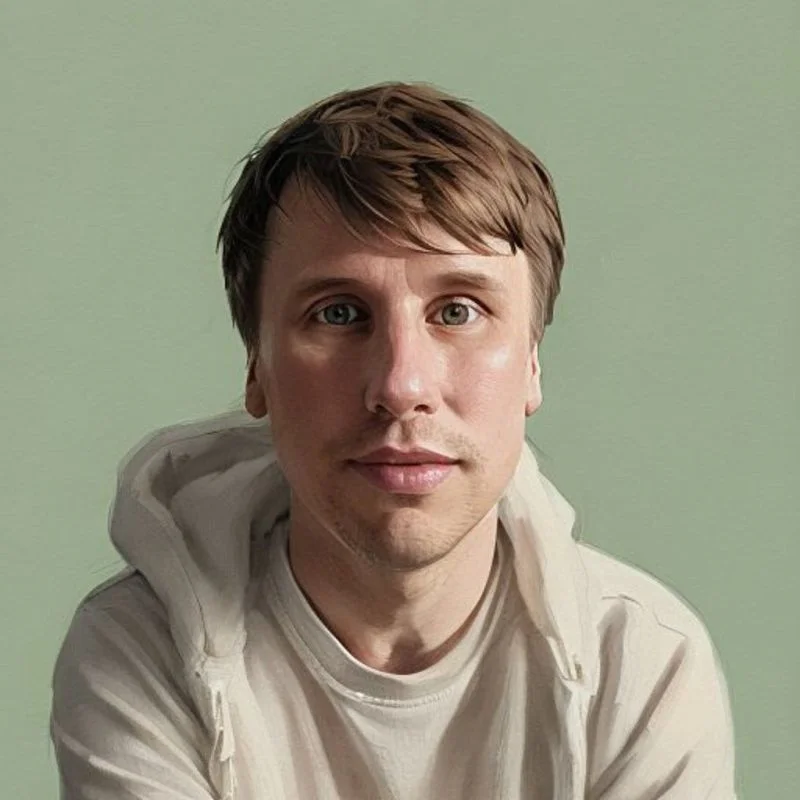
Dr Bart Jaworski

Senior Product Manager, content creator

A product manager with a passion for teaching and sharing product knowledge. He has worked on products of every scale, from small start-ups to the largest FAANG corporations. He achieved success at Microsoft and OLX, among others, and since 2025 he has dedicated himself fully to creating content, consulting, and building training programs in product management.

He has trained more than 20,000 students and helped hundreds of them land a new product role.

One of the leading product management content creators on Polish LinkedIn, where he has built an audience of more than 140,000 followers. He is also a co-author of the bestseller “Next-Gen Product Manager.”

In his doctoral research, he studied the use of evolutionary algorithms for route planning in high-traffic waters. Author or co-author of more than 10 scientific publications.

Experience:StepstoneMicrosoft (Skype)OLX

Pricing

One investment.
For you or your whole team.

1st edition · 50 seats

AI Product Manager Course

Full program - 8 hands-on modules

Price coming soon

Write to us: biuro@magnuso.pl

  • 8 modules: the full product cycle, from strategy to post-release
  • Live online sessions in English + a recording after each one, available for 12 months
  • Terminal setup and working with an AI agent from scratch
  • Building a prototype without the IT department (incl. Lovable, Claude Code)
  • Discovery and the road to product-market fit - from POC, through MVP, to PMF
  • Product decisions you can defend in front of the CFO/CEO
  • Testing, evals, a dashboard, and A/B tests
  • AI Product Manager certificate upon course completion
  • Private alumni community - access never expires
  • Listing in a candidate database shared with employers

The first edition has 50 seats. Once they're gone, enrollment closes.

Contact us

Full refund within 14 days of the start - no questions asked

For companies

Team access

Training several people from one company? We'll prepare an individual quote for your whole team.

Request a quote

Team discounts depend on the number of participants - individual quote.

  • VAT invoice - with a proforma first, on request
  • Bank transfer instead of online payment
  • One invoice per company for the whole team
  • The whole team in the same edition, in the same sessions

Need a proforma invoice?

Get in touch - we'll issue it before payment. biuro@magnuso.pl

14 days to get a refund - no questions asked

We're so confident in the quality of this course that we give you a full 14 days from the course start to change your mind. If you decide it's not for you, we'll refund 100% of your payment. No reason needed, no paperwork. Just send an email to biuro@magnuso.pl.

FAQ

Questions and answers

For aspiring and current product managers and product owners who want to learn to build with AI in practice. No prior AI experience or technical skills required.

Contact

Questions before you enroll?

Write to us - we'll answer your questions about the program, schedule, invoices, and refunds.

biuro@magnuso.pl